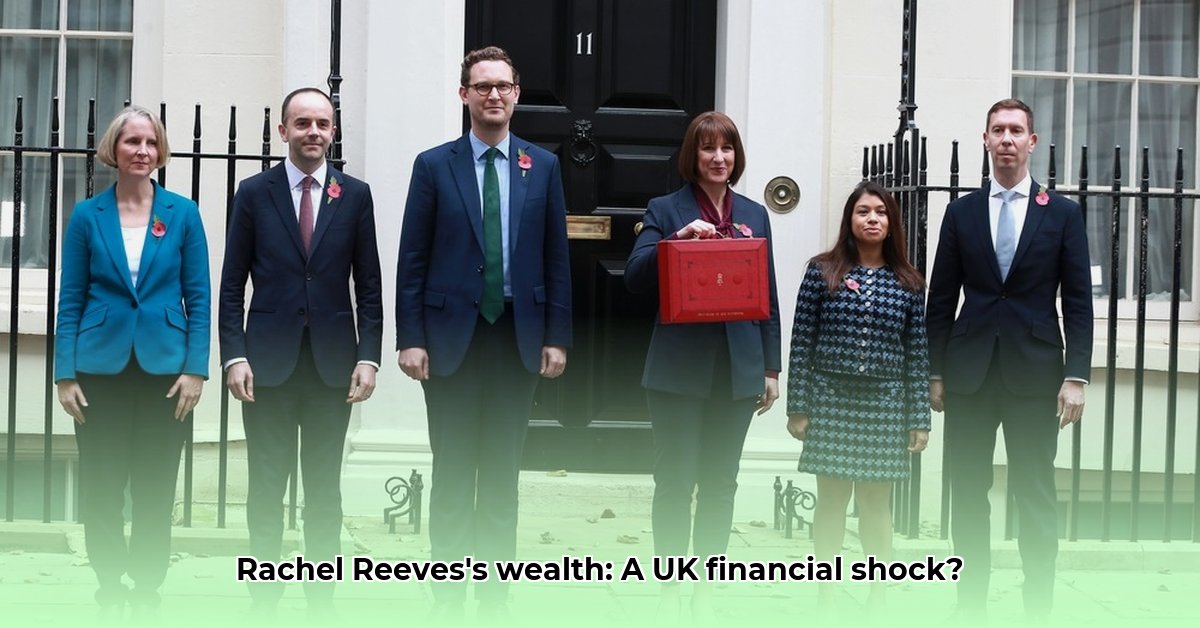
While the precise net worth of Rachel Reeves, Shadow Chancellor of the Exchequer, remains undisclosed and is private information, a far more impactful consideration lies in the potential effects of her economic policies on UK finances. This article analyzes her key proposals and their projected influence on various income groups.
Understanding Rachel Reeves' Economic Policies
Reeves' economic platform centers on a delicate balance: responsible public spending coupled with targeted support for vulnerable populations. This involves investments in infrastructure, education, and workforce development, alongside a commitment to fairer taxation. A core tenet is avoiding tax increases for average working families, a pledge that presents significant fiscal challenges. Her approach, often described as "securonomics," uniquely integrates economic growth with national security objectives—a strategy praised by some for its innovative approach to modern economic complexities and criticized by others for its ambitiousness.
Impact on Income Tax and Thresholds
A crucial element of Reeves' platform is income tax. While she maintains her pledge not to raise income tax rates for average earners, the ongoing freeze on tax thresholds could lead to more individuals inadvertently entering higher tax brackets due to income growth. This subtle yet potentially impactful change warrants close scrutiny. Furthermore, the feasibility of significant public investment while maintaining fiscal responsibility is a major point of contention. Critics question the achievability of these aims, especially regarding managing the national debt. The optimal balance between investment and debt reduction remains a subject of ongoing debate. Many experts are unsure of the true long-term consequences of her policies.
Potential Effects on Different Income Groups
Analyzing the potential impact requires considering both direct and indirect effects across different income brackets. Higher earners might see minimal changes, but lower-income households may face tighter budgets if the cost of living continues its upward trajectory. Businesses will also experience diverse impacts. Increased infrastructure spending could create opportunities, while tax system adjustments might influence profitability. The final outcome hinges on numerous intertwined elements. How will Reeves' policies balance short-term economic pressures with long-term investment needs?
Projected Impacts (Potential Outcomes)
| Stakeholder Group | Potential Short-Term Impacts (0-1 Year) | Potential Long-Term Impacts (3-5 Years) |
|---|---|---|
| Average Citizens | Potential impact from income tax threshold freeze; indirect effects from cost of living changes | Changes to cost of living, employment, and overall quality of life; indirect effects from infrastructure investment |
| Low-Income Households | Potential negative impacts due to cost of living increases if fiscal tightening measures outweigh welfare support | Potential improvements dependent on effectiveness of jobs programs and access to affordable housing |
| Businesses | Impacts dependent on specific tax and spending changes; opportunities from infrastructure projects | Effects on investments, profitability, and job creation; influenced by infrastructure spending and tax adjustments |
| High-Income Households | Minimal direct impact from welfare cuts; indirect impacts from overall economic conditions | Indirect impacts from changes in investment opportunities, potential changes in tax schemes |
Uncertainties and Challenges
Even with analysis, significant uncertainties remain. The risk of US tariffs poses a threat to economic growth, potentially derailing fiscal plans. The efficacy of housing and skills investments depends on effective implementation and addressing potential barriers. Critics also challenge the sustainability of the government's fiscal strategy.
Conclusion: Assessing the Implications
While Rachel Reeves' personal net worth remains private, the potential effects of her economic policies are significant. Her platform involves a complex balancing act with both positive and negative potential outcomes for various income groups and businesses. The future will reveal whether her vision achieves its ambitious goals or faces unforeseen challenges. The longer-term consequences remain subject to ongoing economic and political developments.